How to Plan a Food Trip From YouTube Food Videos
Build a food trip itinerary from YouTube food videos: separate dishes from places, log queues and hours, and cluster meals by neighborhood.
On this page
A food trip itinerary works best when you plan meals by neighborhood and by time of day rather than by a ranked list. Pull every place and dish from the food videos you trust, separate the dishes you want to try from the places you want to visit, log the queues and opening times, then cluster everything so each day has one or two proper meals, a few snack stops and no more than one long wait.
Below is that method, worked through with a real Osaka food guide.
What a food video gives you, and what it leaves out
Locavore Eats' Osaka Food Guide: 20 Places to Eat & Drink, published in April 2025, is a strong source to plan from. Its description lists all 20 places with links, gives each one a chapter, and states when it was filmed: 20-24 October 2024, with prices as of the date of filming.
| What it gives you | What it leaves out |
|---|---|
| Correct spellings and links for every place, in the description | Opening days and closing days |
| Queue times, sometimes with the hour they arrived | Where many of the places are |
| Honest comparisons between versions of the same dish | Prices in the narration (they aren't in the transcript) |
| One chapter per place, so every stop has a timestamp | Distances between places |
The left column is the planning gold. The right column is your homework.
Step 1: Separate the dish from the place
Food videos mix two kinds of recommendation. Some are about a dish you can eat in many places; others are about one specific place. Treat them differently.
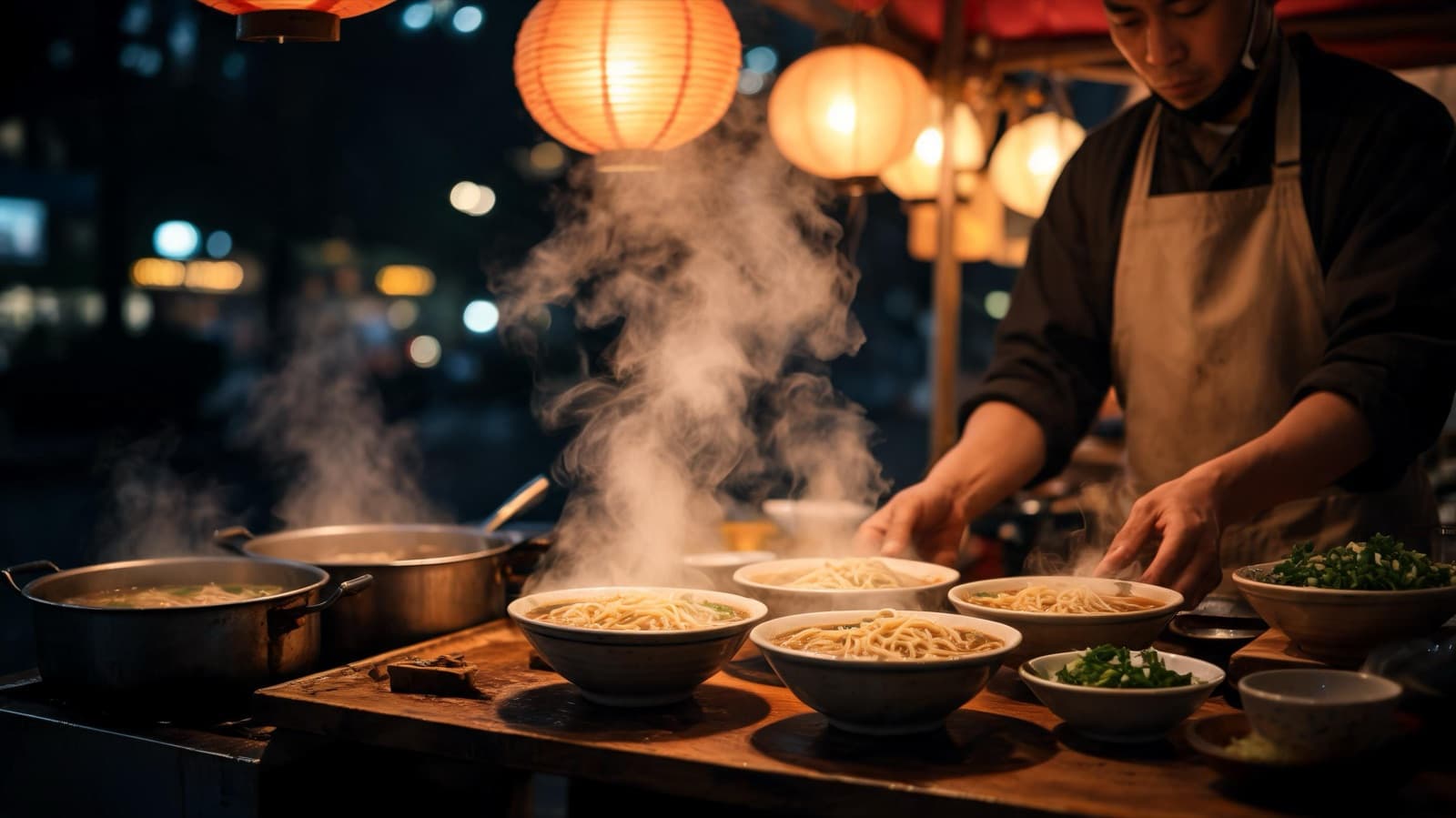
When the dish is the goal, you have options. The Osaka video tries takoyaki at four places:
| Place | Area | What the creators say |
|---|---|---|
| Takoyaki Tanjiro | Umeda, in a covered shopping street | Not the best, but a decent benchmark |
| Goonies | Nipponbashi Den Den Town | A punchier sauce and a less runny batter |
| Takoyaki Juhachiban | Dotonbori | Coated in tempura bits for crunch; lines can get big |
| Fumichan | Not stated | The cheapest, almost half the price of the others, and their favorite |
If you want great takoyaki, any of these can work, so pick the one that falls on your route. The same goes for okonomiyaki: the creators waited an hour at 3 p.m. at Namba Okonomiyaki Ajinoya Honten, which they say was recognized as a Michelin Bib Gourmand restaurant in 2016 and 2017, and rated Yakisoba Baby, just west of Dotonbori, not as good but with no wait.
When the place is the goal, build the day around it. At Izakaya Toyo, the creators say the food is tasty but nothing exceptional and that you're there for the show, a cook using a flamethrower on tuna. Matsusaka M Umeda, which they call the most wallet-breaking stop on the list, is a set-menu splurge. Neither has a substitute down the street.
Step 2: Log queues, hours and prices
For every place, note the facts that decide when you can go. From the Osaka transcript:
- Yawaragi is an izakaya at night and a breakfast spot early in the morning. The creators arrived at 7 a.m. and waited 2 hours, even though the line wasn't long.
- Udon Kyutaro opens at 7 a.m., with tight, shoulder-to-shoulder seating.
- Nonkiya, a standing oden bar in Shinsekai, was packed with locals as soon as it opened in the morning.
- Jouroku has its waiting area seated inside, which makes the wait easier.
Captions mangle food place names more than most. This transcript writes Kuromon as "Kuraman," Tanjiro as "Tangro," Nonkiya as "Nonia" and Jouroku as "Joku," so take spellings from the description, as with any notes from travel vlogs.
Prices need the same care. The title promises prices, but the narration doesn't say them, so pause the video to note each one, and record the filming date beside it. Prices from October 2024 are anchors, not quotes.
Step 3: Cluster meals by neighborhood
Now sort the places by area. Using the areas named in the video, plus Kuromon Market's own location in Nipponbashi, the Osaka list falls into clusters:
| Area | Places from the video | Planning note |
|---|---|---|
| Dotonbori and Namba | Takoyaki Juhachiban, the Dotonbori melonpan ice cream spot, Ajinoya Honten, Yakisoba Baby | Two okonomiyaki options with very different waits |
| Nipponbashi | Goonies in Den Den Town, Kuromon Ichiba Market | At the market, you can ask to have seafood cooked |
| Shinsekai | Nonkiya, Kushikatsu Shinsekai | The creators call it the neighborhood where kushikatsu was invented |
| Umeda | Takoyaki Tanjiro, Matsusaka M (the description lists its Umeda Fukushima branch) | Pairs a cheap snack with a splurge dinner |
| Near Osaka Castle | SOT Coffee Roaster | A 10-minute walk from the castle |
| Location not given | Yawaragi, Udon Kyutaro, Mill Pour Coffee, Jouroku, Izakaya Toyo, Fumichan, Spaghetti No Pancho, Shogun Burger, Motsunabe Miyawaki | Pin these from the description links before assigning a day |
That last row is the important one. Nine of the 20 places come with no location in the narration, so they can't go into a day until you've pinned them. Our guide to planning an itinerary by neighborhood explains how to turn clusters like these into half days.
Step 4: Pace the eating
A food trip fails the same way a sightseeing trip does: too much packed into a day. A few rules keep it enjoyable:
- One long queue per day. If the day includes Ajinoya or a 7 a.m. breakfast queue, make everything else walk-in.
- Share where you can. Splitting a portion leaves room for the next stop, which matters on a day with several versions of the same dish.
- Alternate heavy and light. Follow fried food with coffee, a market snack or a walk.
- Put the splurge on a light day. A set menu like Matsusaka M deserves an appetite.
- Leave room for something that isn't food. A castle walk or a park between meals makes the next one better.
Here is an example of how one Dotonbori and Nipponbashi day could flow using only the video's places. The video gives no opening hours for these, so check them before you fix the order:
| Order | Stop | Why there |
|---|---|---|
| 1 | Kuromon Ichiba Market | Graze, and have seafood cooked to order |
| 2 | Goonies or Takoyaki Juhachiban | One takoyaki stop; Juhachiban may have a line |
| 3 | Yakisoba Baby, or Ajinoya Honten if this is your queue of the day | Choose between no wait and the Bib Gourmand version |
| 4 | The Dotonbori melonpan ice cream spot | A sweet finish |
Step 5: Map it and fit it around the rest of the trip
Pin every place on one map. In Google My Maps, the help page describes a Style by data column option that gives each group of places its own color, so a Dish column puts every takoyaki pin in one color and every coffee stop in another. Our guide to saving a video's stops to a map list covers the import steps.
Then fit the food clusters around the sights. If you're pairing meals with Osaka's landmarks, our Osaka 3-day itinerary gives you the sightseeing side.
From food video to food plan
Vidtrip asks about your interests and lets you add notes such as dietary needs before it builds a plan from a YouTube travel video. Plans include a food list of dishes and where to try them, and every stop links back to its moment in the video. Paste a food or travel video link and see how the meals fall into days.
Check before you go: the Osaka video was filmed in October 2024. Opening days, hours, queues and prices change, and small places close or move, so check each place's own site or recent listing before your trip.
This guide was drafted with AI from video transcripts, then edited and checked by the Vidtrip team. How we write these guides