Rome With Kids: A 3-Day Itinerary From a Video Guide
A Rome with kids itinerary for 3 days, built from a first-timer video guide and paced for ages 8 and 11: taxis between areas, park breaks and rough costs.
On this page
A Rome with kids itinerary works best as three focused days: the Spanish Steps, Trevi Fountain and Pantheon on Day 1, the Colosseum, Roman Forum and an orange-garden viewpoint on Day 2, and St. Peter's Basilica, Castel Sant'Angelo and rowboats in Villa Borghese on Day 3. Take taxis between distant areas and build a meal or park break into every afternoon, and children can enjoy the same highlights as any first-time visitor.
The plan below slows down a fast-paced first-timer video for a family, keeping the creator's picks and linking each stop to its moment in the video.
How this Rome with kids itinerary was built
The source is 3 PERFECT DAYS IN ROME ITINERARY (FOR FIRST TIMERS) by Happy to Wander. Its presenter, Christina, designed the route after three visits to Rome. The original is built for speed, with early starts, long walks, an optional Forum sunrise and a night tour. For an adult-paced first visit built from a different video, see our three-day Rome itinerary for first-timers, which gives each day one focus.
This version was tailored for a family with two kids aged 8 and 11, traveling in October on a mid-range budget, at a balanced pace, interested in culture and food, with a note to avoid very long walking stretches. To fit that, the plan:
- Caps each day at five main stops, including meal, snack or park breaks.
- Uses taxis between distant clusters instead of the video's full walking route.
- Drops the sunrise start, the night tour and the bar evening in Trastevere.
- Leaves out the Vatican Museums to give St. Peter's, Castel Sant'Angelo and Villa Borghese more time, and makes the dome climb optional.
The full plan, which Vidtrip's AI planner generated from the video and which you can view free with a PDF download, is the Rome example plan. Our guide to planning a family trip itinerary with kids explains the method behind these changes.
Day 1: Fountains, the Pantheon and Trastevere
| Time | Stop | Time to allow | Approx. cost |
|---|---|---|---|
| 09:00 | Spanish Steps and Piazza di Spagna | 40 minutes | Free; coffee and pastry about €3-6 |
| 10:00 | Trevi Fountain and Galleria Sciarra | 1 hour | Free |
| 11:20 | Pantheon | 1 hour | About €5 per adult; kids may be free or reduced |
| 12:40 | Armando al Pantheon | 1 hour 15 minutes | About €20-35 per adult, €10-18 per child |
| 15:00 | Jewish Ghetto, Ponte Fabricio and Trastevere | 2.5-3 hours | Taxi €12-20 per ride; Trapizzino about €5-7 each |
Start with a cornetto at a coffee bar near your hotel; Christina suggests a local favorite over a famous café, and hot chocolate works for kids. Admire the 135 Spanish Steps and the Barcaccia fountain from the square rather than climbing up and down.
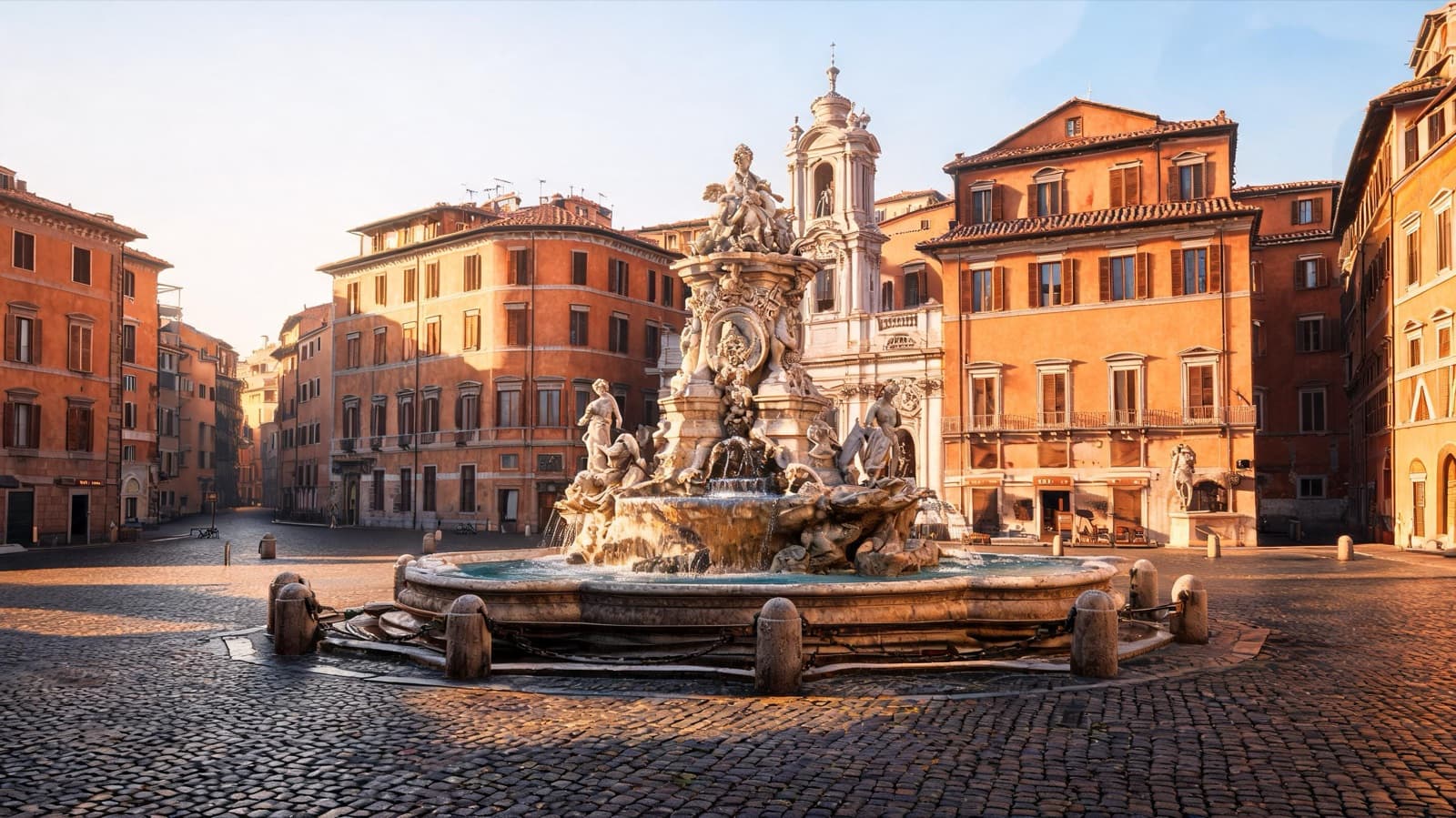
At the Trevi Fountain, kids can toss a coin over the left shoulder, which by tradition means you will return to Rome. Two minutes away, Galleria Sciarra's frescoed courtyard under a glass-and-iron roof is calm after the fountain crowds.
The Pantheon is ancient Rome's best-preserved building, with the world's largest unsupported concrete dome and an open oculus. Point out Raphael's tomb and the granite columns outside, brought from Egypt, and give the kids a few minutes to sit and look up.
Lunch is at Armando al Pantheon, Christina's exception to the rule about not eating next to big sights; she calls the carbonara unreal. Reserve well ahead. Afterward, take a taxi to the Jewish Ghetto to see the Turtle Fountain and the Great Synagogue from outside, then cross Ponte Fabricio, which dates to 62 BC, onto Isola Tiberina. Continue into Trastevere's medieval lanes only as far as the kids are enjoying it, and end with an early dinner or a trapizzino, a Roman street-food pocket.
Day 2: Gladiators, the Forum and orange-garden views
| Time | Stop | Time to allow | Approx. cost |
|---|---|---|---|
| 09:15 | Colosseum guided tour | 1.5-2 hours | About €18-40 per adult; kids often free or reduced |
| 11:45 | Lunch in Monti | 1 hour | About €15-28 per adult, €9-16 per child |
| 13:00 | Roman Forum and Palatine Hill | 2 hours | Usually included with the Colosseum ticket |
| 15:15 | Gelato and rest break | 30 minutes | About €3-5 each |
| 17:00 | Giardino degli Aranci and dinner in Testaccio | 2.5 hours | Garden free; dinner about €18-30 per adult, €10-18 per child |
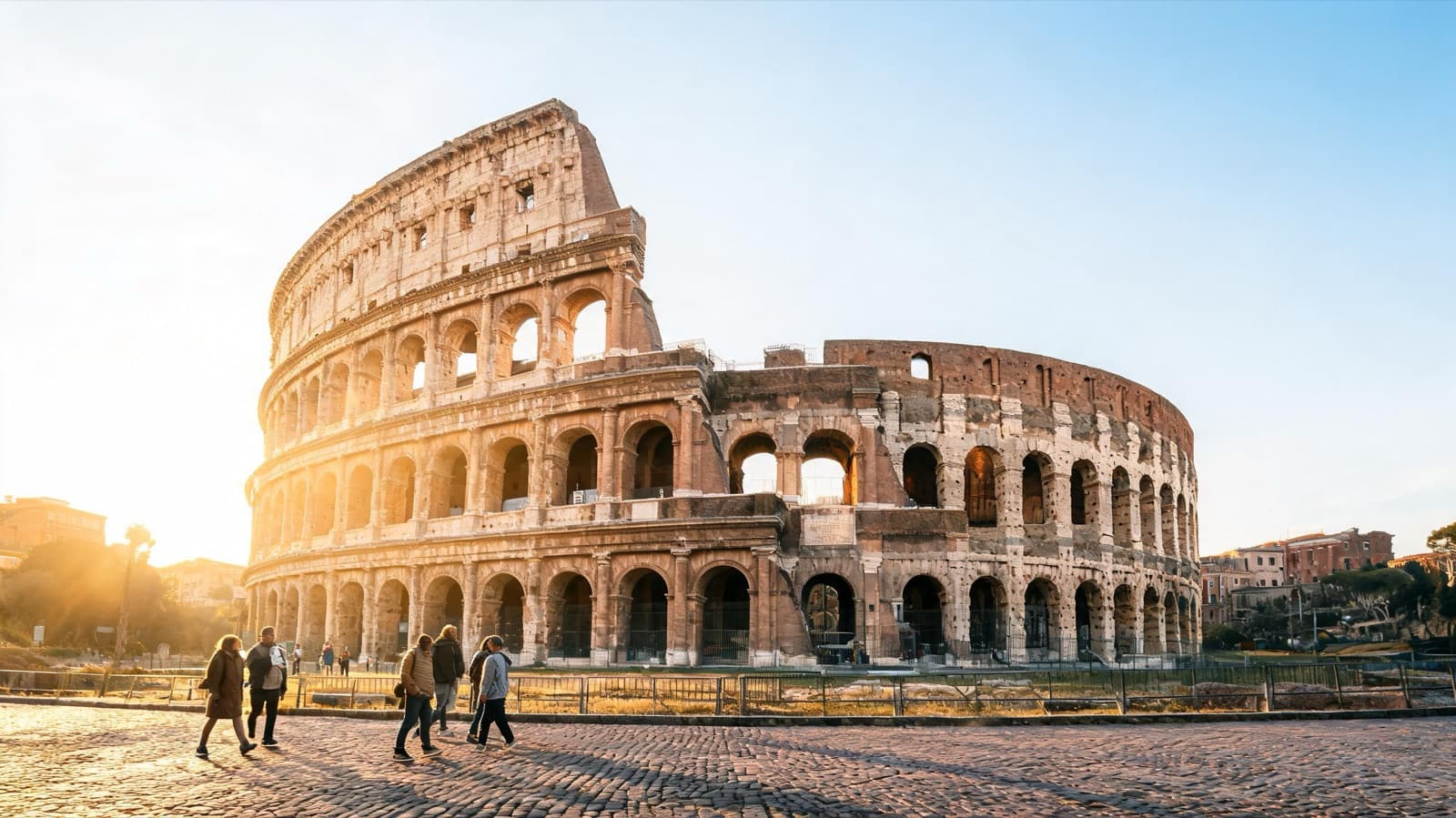
Book the Colosseum well ahead, as Christina insists, and take the first slot you can get (she says it is usually 9:30 a.m.). If your kids are curious how the arena worked, an underground tour shows more of it.
Eat before the Forum, but not right beside the Colosseum: Christina warns the area is full of tourist traps and sky-high prices. The plan heads to Monti instead; check recent reviews before you sit down.
The Roman Forum was the center of ancient Rome's business and government, and Palatine Hill above it is where legend says a she-wolf saved Romulus and Remus. Christina finds the ruins hard to appreciate without context, so book a guide or download an audio guide, and tell the kids a few stories beforehand. Bring water; the paths are uneven and sloped.
Then stop for gelato and a proper sit-down, as the video suggests. Next, take a taxi up the Aventine to the Giardino degli Aranci, a shaded garden of orange trees with one of the best panoramas in the city. Finish with dinner in Testaccio, the food neighborhood Christina recommends for a second night out, and aim for late-afternoon light rather than a late sunset.
Day 3: St. Peter's, a castle and a Roman park
| Time | Stop | Time to allow | Approx. cost |
|---|---|---|---|
| 08:15 | St. Peter's Basilica and St. Peter's Square | 2-2.5 hours | Basilica free; dome about €8-10 |
| 11:15 | Lunch in Prati | 1 hour | About €15-28 per adult, €9-16 per child |
| 12:45 | Castel Sant'Angelo | 1.5 hours | About €16-20 per adult; reduced child tickets |
| 15:15 | Villa Borghese rowboats | 1.5 hours | Park free; about €5-10 per boat |
| 17:15 | Terrazza del Pincio | 1-1.5 hours | Free; snacks about €4-10 each |
Arrive early at St. Peter's, the largest church in the world, and dress with shoulders and knees covered. The dome climb is optional here because of the stairs; Christina notes it can't be booked ahead, so decide on the day, and time your arrival at the top for the hour to hear the bells. Kids may also like the Vatican post office by the basilica exit, where you can send a postcard from the world's smallest country.
Eat lunch in Prati, away from St. Peter's Square, where Christina warns of inflated prices. Then visit Castel Sant'Angelo, Emperor Hadrian's mausoleum turned papal castle, whose fortress rooms and rooftop views make a good contrast to the basilica. Take a taxi to Piazza del Popolo instead of the video's 20-minute walk.
Villa Borghese is a short walk up from the piazza. Rent a rowboat on the little lake by the temple, then finish at the Terrazza del Pincio, which Christina calls one of Rome's most amazing sunset spots. Arrive 30 to 45 minutes before sunset, then have an early dinner nearby.
What the creator recommends
- Book popular sights, especially the Colosseum, in advance, her most important tip.
- Galleria Sciarra for frescoes and a grand glass ceiling.
- Armando al Pantheon for fair prices and carbonara.
- La Tavernetta 29 da Tony e Andrea in Trastevere for a well-priced, fun and slightly chaotic dinner.
- A Colosseum underground tour to see more of the structure.
- Sunsets from Giardino degli Aranci and Terrazza del Pincio, plus a Villa Borghese rowboat.
What the creator says to skip
- Unreviewed restaurants around the Colosseum. She warns of tourist traps and sky-high prices.
- The Vatican Museums on a short trip, unless the collection is a priority. She finds them too crowded with tour groups to enjoy, and suggests the last entry slot if you go.
- Circus Maximus as a must. So little remains that she would not class it as essential, though it works as a stop on the way.
- Bocca della Verità. She calls it mainly a cheesy photo op these days.
Pacing, getting around and costs
Five stops a day, counting meals, is the top of a balanced pace, and it works here because every day mixes meals and breaks into those five. If your kids are younger or you are arriving jet-lagged, our guide to pacing each day shows where to cut.
The plan uses taxis for four hops: the Pantheon to the Jewish Ghetto, Trastevere back to your hotel, the Aventine to Testaccio, and Castel Sant'Angelo to Villa Borghese. For buses and the metro, a standard 100-minute ticket costs about €1.50; validate paper tickets before boarding.
The sample plan estimates €180-260 per adult per day at a mid-range level, covering a share of the hotel, admissions, casual meals, snacks and a few taxis. Children often get reduced admission; tours and the Vatican Museums would raise the total.
| Area | Why families might pick it | Family room, approx. per night |
|---|---|---|
| Prati | Calm and practical near Vatican City, with quieter evenings | €180-300 |
| Monti | Central and close to the Colosseum, with casual dining | €190-320 |
| Centro Storico | Short walks to the Pantheon and Trevi Fountain, but pricier | €220-360 |
| Testaccio | Residential and food-focused, with fewer tourists in the evening | €160-270 |
For October, pack a rain layer, warm layers for mornings and evenings, water bottles, snacks and grippy shoes.
Check before you go: every price above is an approximation from when the plan was generated. Ticket prices, child discounts, entry rules and opening times change, so confirm them on official sites before you travel.
Get the full plan or adapt it to your family
The interactive Rome plan has all three days, food picks, where to stay, packing notes and a free PDF download. If your children are a different age or you want more days or a slower pace, a natural next step is to make your own version of this plan on Vidtrip, tailored to your dates, budget and notes such as picky eaters. To work from the video by hand, see our guide on how to turn a YouTube travel video into an itinerary. If Rome is part of a longer family trip, our Italy itinerary for 10 days shows how Florence and Venice connect to it by train.
This guide was drafted with AI from video transcripts, then edited and checked by the Vidtrip team. How we write these guides