What Travel Videos Don't Tell You (and How to Check)
What to check before following a travel video: filming season, closures, new prices, booking rules, edited-out crowds and real distances.
On this page
Before you follow a travel video, check the things the edit rarely makes clear: when it was filmed, whether each place is open on your dates, what things cost now, what needs booking, how crowded it really gets, and how far apart the stops are. A good travel video is an honest record of one trip, in one season, at one moment's prices. Your trip will be different, and a little checking closes the gap.
Each section below uses real examples from published guides, so you can see what these gaps look like in practice.
A travel video is a snapshot, not a schedule
Creators film over a few days, then cut hours of footage into something watchable. That is what makes travel videos enjoyable, and it is also what strips out the context you need to follow them: the date, the weather, the queue, the long walk between two shots that sit side by side in the edit.
None of this is a reason to distrust travel videos. Travel vlog accuracy is usually good on what the creator saw; the problem is everything that has changed since, or never made it on camera. Treat the creator's picks as a strong starting point and confirm the details that move.
When was it filmed, and in what season?
The upload date is the latest the footage could be, not when it was shot. Look for seasonal clues. In Turkey Travel Planner's 3-day Istanbul guide, published in January 2026, the creator wishes viewers a merry Christmas while walking Istiklal Avenue, so the city on screen is a winter city.
Season changes more than the weather. It shifts sunset times (and so every "go here for sunset" stop), the daylight you have for long walks, crowd levels and sometimes opening hours. Exotic Vacation's Lisbon guide gives the Castle of the Moors' hours as 9:30 a.m. to 8:00 p.m. during the summer season, a hint that hours may differ at other times of year.
Closures, opening days and last entry
Weekly closing days are easy to miss when they are mentioned in passing. The Istanbul creator points out that Topkapı Palace is closed on Tuesdays (8:50). Put the palace on a Tuesday and your whole second day falls apart.
Last entry is another trap. In the Lisbon guide, the Mosteiro de São Vicente de Fora closes at 6 p.m., but the last tickets are sold at 5 p.m. (6:46). Plan around closing time and you arrive too late.
Restaurants and cafés change the most. A place can move, change its days or close entirely after a video goes up, and the video will keep recommending it. Recent reviews on a map app are the quickest way to catch outdated travel information like this.
Prices that changed, and the currency trap
Every price in a video is a quote from the day of filming. Treat it as an anchor, then update it. Watch for three things:
- Age. The Lisbon guide was published in July 2024, so its costs are more than two years old.
- Currency. That same guide quotes everything in US dollars, including a Tram 28 ride at about $4 and the Lisboa Card at about $22 for 24 hours (2:35), while you will pay in euros. The Istanbul guide mixes euros and dollars for sights in Turkey.
- What's included. A ticket may cover one part of a site and not another. The Istanbul creator explains that Hagia Sophia's ground floor is used for prayer and the upper gallery needs a ticket, quoted at €25 (1:18).
For budgeting, record the price, the currency and the video date together, then check the official site before you rely on the number.
Booking requirements mentioned in passing
Many of the details that make or break a day appear in a single sentence. From the guides above:
- Happy to Wander's Rome guide says the Colosseum needs advance booking and suggests the first slot, usually 9:30 a.m., to avoid crowds and summer heat.
- The same guide notes that the St. Peter's Basilica dome climb can't be booked in advance, so you decide on the day (17:05).
- In Lisbon, Prado is very hard to get into without a reservation, while Boa-Bao takes none at all and rewards an early queue.
Booking systems change, so check each attraction's official site for the current rules, and book anything with timed entry as soon as your dates are firm.
Crowds and queues that got edited out
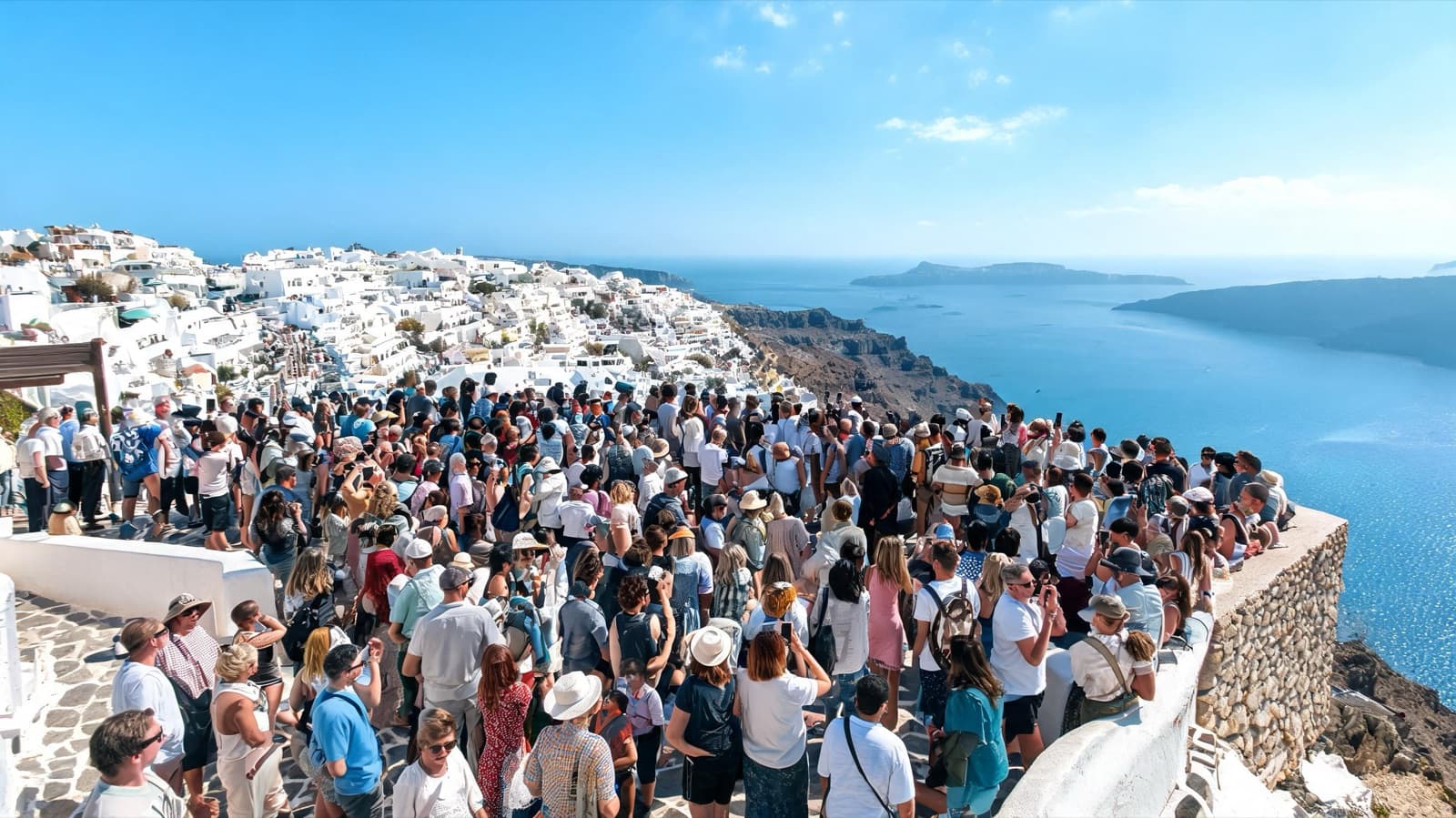
A calm shot of a famous spot often means the creator went early, waited for a gap or framed out the people. The Lisbon creator is upfront about this: visiting Miradouro de Santa Luzia at sunrise means "you'll beat the crowds that gather here later in the day" (3:21), and the Portas do Sol viewpoint gets crowded at sunset. In Rome, the Aventine keyhole is described as touristy with a likely line (15:11), and the Vatican Museums as often very crowded with tour groups.
If a video doesn't mention crowds, assume the headline sights are busy and schedule the ones you care about most for early morning or late in the day.
Distances and transit time between stops
Cuts make everything look close. Two stops that follow each other in a video might be a short walk apart or a train ride apart. The Lisbon guide spells some of these out: Belém is about 5 miles west of the city center, roughly a 15-minute taxi ride (9:15), and Sintra is about 30 minutes by car or around 40 minutes by train (12:36). Many videos skip this entirely.
Map each day's stops in order and check the route for the time of day you will travel. Add a buffer for finding entrances, ticket lines and hills, none of which show up in a video's running time.
Things to check before following a travel video: a checklist
| Check | What to look for | Where to confirm |
|---|---|---|
| Filming date and season | Upload date, weather, holidays, comments about changes | Video description and comments |
| Opening days and hours | Weekly closures, last entry, seasonal hours | Official website |
| Prices | Currency, date of the quote, what is included | Official ticket page |
| Bookings | Timed entry, reservations, sell-out risk | Official website or restaurant booking page |
| Distances | Real travel time between consecutive stops | A map app, set to your travel time |
| Crowds | When the creator visited compared with when you will | Recent reviews and photos |
| Sponsorship | Disclosures, booking or affiliate links | Description, caption, opening seconds |
| Safety and scams | The creator's warnings and official advice | Your government's travel advice |
The same checklist works for any plan, including ones generated by software; how to fact-check an AI travel itinerary goes deeper on hours and travel times, and how to spot a sponsored travel recommendation covers the sponsorship row. Once everything is confirmed, keep a copy you can open without signal. Here is why you need an offline copy of your itinerary.
Check before you go. Do a final round of checks in the week or two before your trip, because hours, prices and booking rules can change at short notice, especially around holidays. If you are building your plan from a video, Vidtrip keeps each stop linked to the moment in the video where it appears, so you can hear exactly what the creator said before you verify it. When you are ready, turn your chosen video into a plan and run this checklist over it.
This guide was drafted with AI from video transcripts, then edited and checked by the Vidtrip team. How we write these guides